Same transparency promise. Broader retail coverage.
Yieldigo is a Prague-based 'glass-box AI' pricing platform popular with CEE retail chains, with a strong transparency philosophy and 8-clicks-to-action UX. Retailgrid shares the explainable-AI philosophy and adds broader European geographic reach, faster self-serve onboarding, and a spreadsheet-feel workspace pricing managers actually live in day to day.
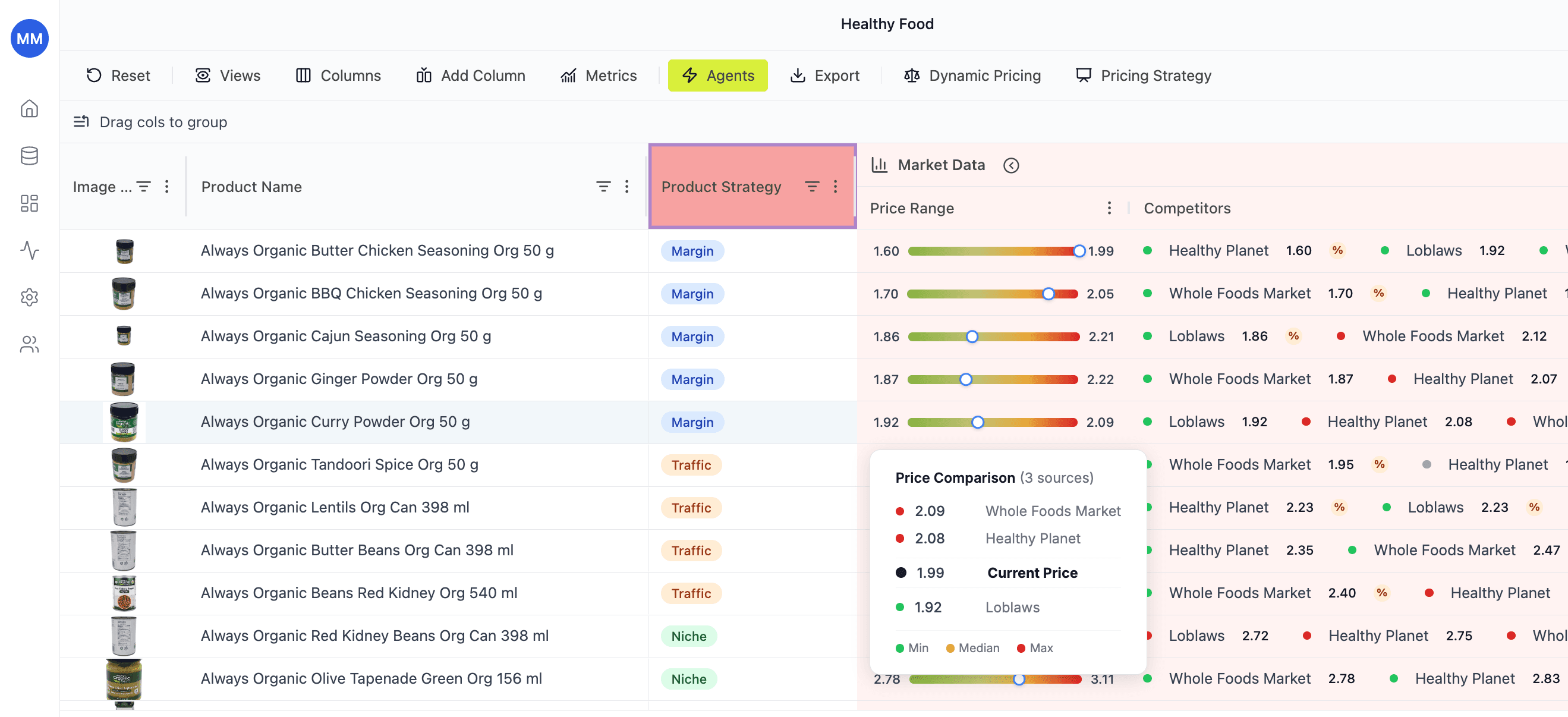
Retailgrid vs Yieldigo - across the dimensions that matter.
Comparison points sourced from public product documentation and our internal competitive intelligence as of November 2026. Vendors evolve - flag anything that looks off via /contact and we'll update.
Three reasons mid-market retailers pick Retailgrid over Yieldigo.
Same transparency philosophy, broader coverage
Yieldigo and Retailgrid both reject black-box AI. The difference: Retailgrid is built for the European mid-market more broadly, not focused primarily on CEE chains.
Self-serve, not 12-week implementation
Yieldigo's 12-week implementation cycle reflects enterprise-style onboarding. Retailgrid is self-serve from a CSV - typical mid-market teams have agent proposals in days.
The grid your team already thinks in
Yieldigo's cockpit is a great UI for pricing strategists. Retailgrid's grid is the workspace pricing managers already use daily - spreadsheets, but with the AI wired in.
Common questions about Retailgrid vs Yieldigo.
Yieldigo claims 3-12% margin recovery. Can Retailgrid match that?
Does Retailgrid cover CEE markets like Yieldigo does?
Glass-box AI explanation - what does that look like in Retailgrid?
See Retailgrid on your data - not Yieldigo's.
Book a 20-minute walkthrough. We'll run the demo against a sample of your catalog so you can judge the workspace and the agent on real numbers.