AI that proposes. You decide how much it acts on.
Full autopilot is irresponsible. Pure manual is too slow. Retailgrid's agentic pricing gives you configurable autonomy — full auto for low-risk SKUs, human-in-the-loop for sensitive categories, with the same audit trail across both.
Three capabilities that move pricing from manual to managed.
Not a model. Not a dashboard. A set of agents that read your data, propose actions, and execute against rules you set — with the level of autonomy you choose per category.
One pricing engine. Many speeds.
Tag every SKU with a role. The agent treats them accordingly.
- Per-SKU product roles: KVI, Core, Background, plus custom roles
- Inherit role from category, override at the SKU level
- Rules and autonomy settings layer on top of role automatically
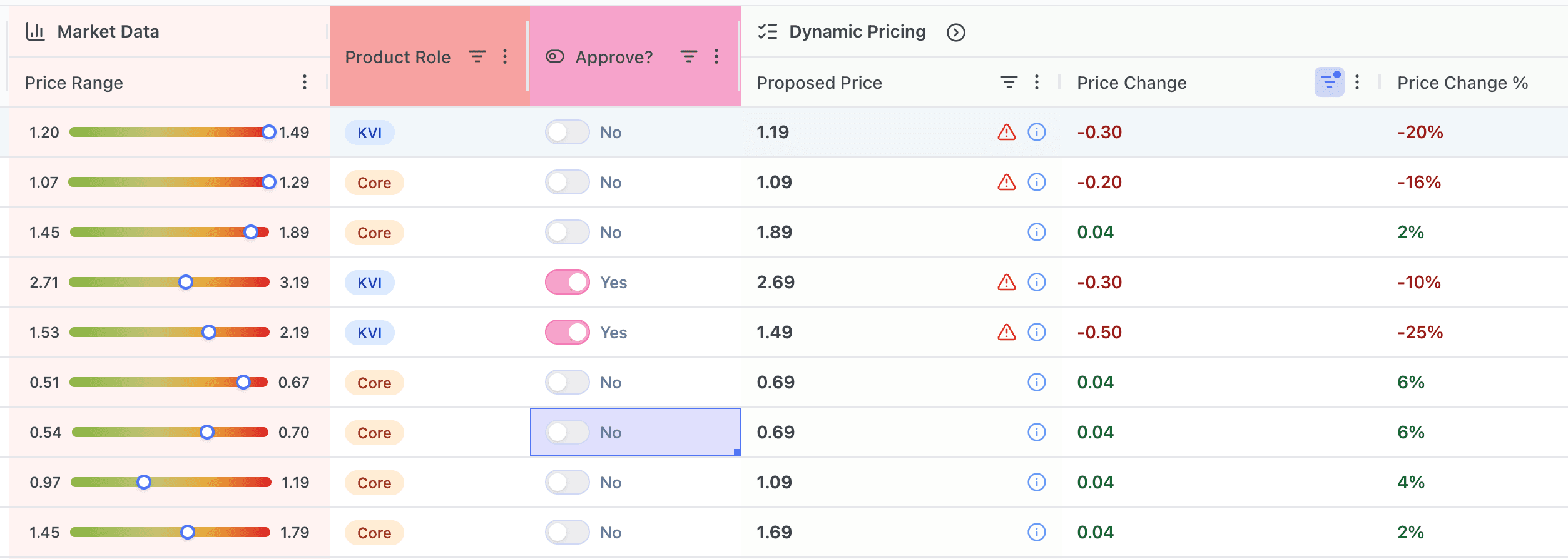
Bulk-approve thousands. Inspect dozens. Override one.
- Bulk-approve by rule, category, or margin threshold
- Exception queue surfaces only the proposals that need human eyes
- One-click override on any proposal, with reason captured for audit
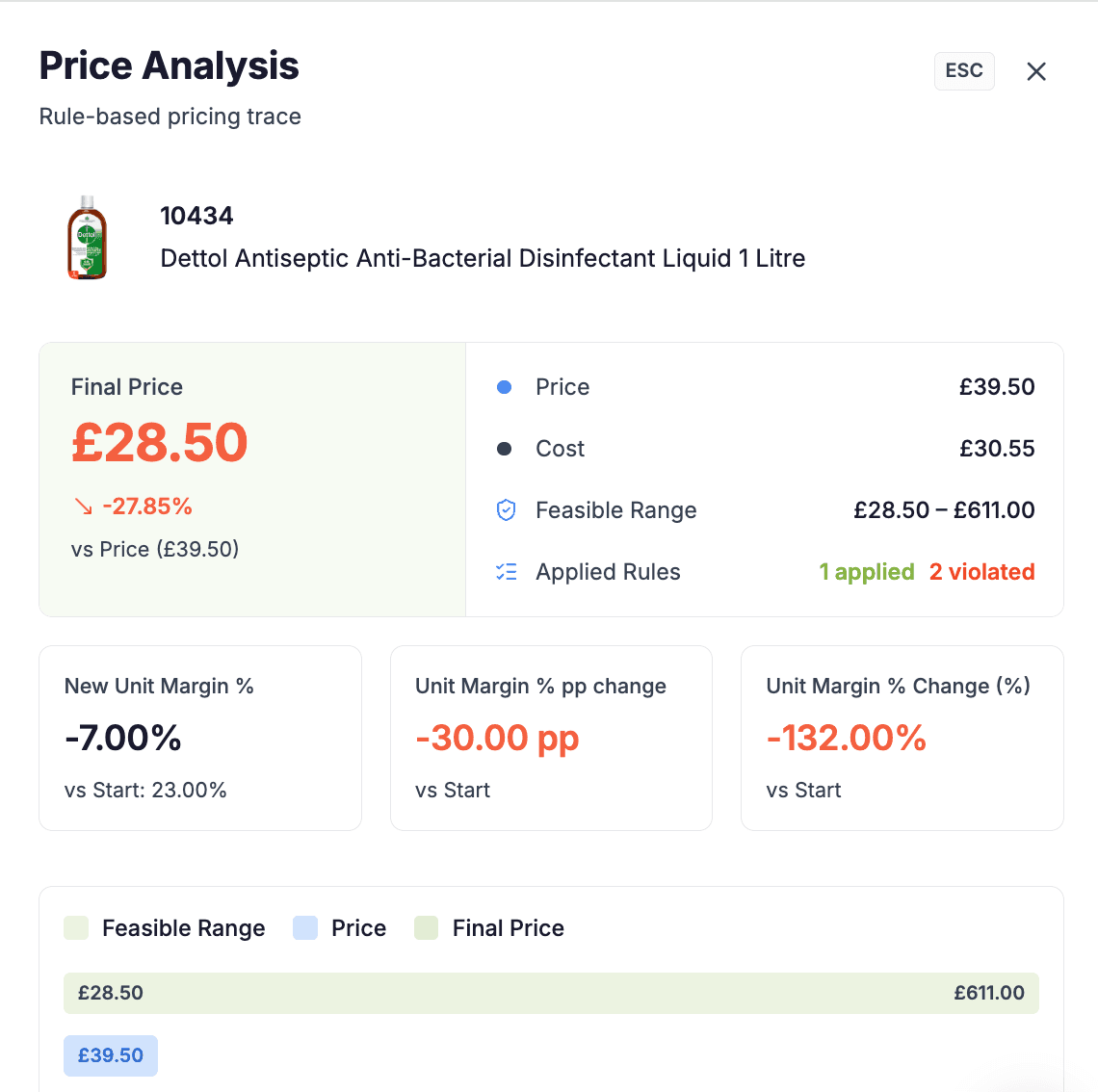
Every move traces back to a reason.
- Final price with feasible range and applied vs violated rules
- Margin impact preview before approval
- Per-SKU history queryable by date, category, or rule
Configure once. Run forever. Tune at the edges.
The first week is configuration. Every week after, the agent does the work — and your team approves the exceptions.
Configure rules and tiers
Set pricing rules in plain language. Assign autonomy tiers per category. Define what's a routine move (auto) and what needs sign-off (approval queue).
Agent runs the catalog
Daily or hourly, the agent reads live signals, scans the catalog against your rules, and proposes price changes. Auto-tier SKUs reprice in place. Approval-tier SKUs queue for review.
Approve the exceptions
Bulk-approve by rule for routine changes. Drill into the exception queue for the moves that need human judgment. Every approval (or override) is logged with a reason.
The agentic pricing your CFO will actually sign off on.
The reason most pricing AI fails in retail isn't the math — it's the trust. Retailgrid is built so every move has a reason, every rule has an owner, and every override has a record.