Retailgrid vs 7Learnings

Predictive AI plus the rules your team can audit.

7Learnings is a Berlin-based predictive pricing platform with a strong ex-Zalando pedigree, modeling demand per price point to optimize profit. Retailgrid combines the same kind of ML-driven price prediction with an explicit rules engine - so a pricing manager can audit every decision, override when the model is wrong, and explain prices to category teams without referencing a black-box recommendation.
retailgrid.io/pricing
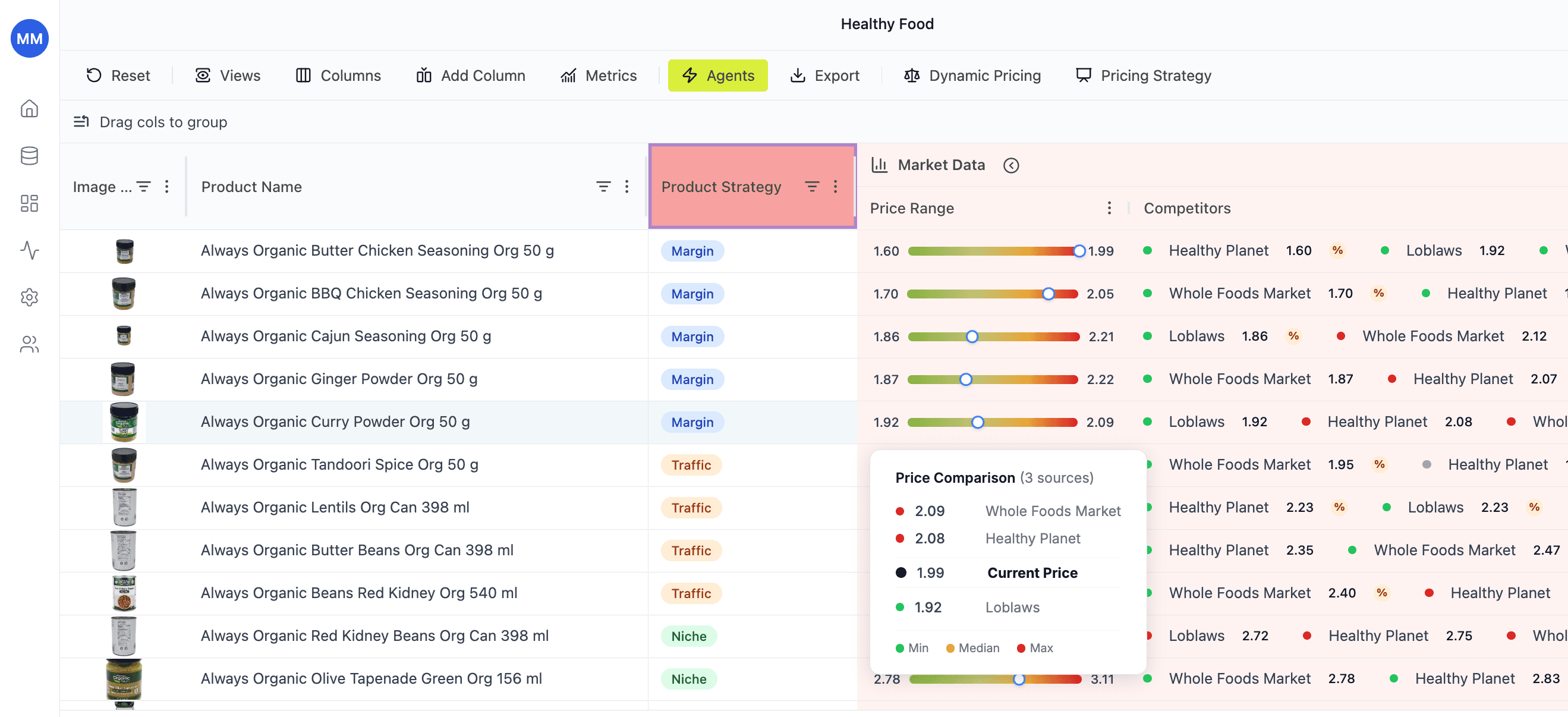
Retailgrid pricing grid showing live competitor prices, price ranges, and competitor analysis across SKUs
Side by side

Retailgrid vs 7Learnings - across the dimensions that matter.

Dimension
Approach
Retailgrid
AI agents operating within explicit rules, with full audit trail.
7Learnings
ML demand modeling per price point - 'targets, not rules'.
Dimension
Explainability
Retailgrid
Per-SKU audit - which rule, which agent decision, which inputs.
7Learnings
Predictive model outputs with confidence intervals.
Dimension
Workflow
Retailgrid
Spreadsheet-feel grid built for pricing managers - filter, pivot, approve.
7Learnings
Predictive workspace built for pricing analysts and data scientists.
Dimension
Catalog coverage
Retailgrid
Pricing + competitive monitoring + assortment intelligence in one grid.
7Learnings
Pricing + demand modeling. Competitive data via integrations.
Dimension
Geographic reach
Retailgrid
EU-wide, English UI, multi-language. Helsinki HQ.
7Learnings
Germany-led, expanding to North America post Series B (May 2025).
Dimension
Onboarding
Retailgrid
Self-serve setup from CSV or Shopify in days.
7Learnings
Implementation engagement; profitability claims require historical data to model.

Comparison points sourced from public product documentation and our internal competitive intelligence as of May 2026. Vendors evolve - flag anything that looks off via /contact and we'll update.

Why teams switch

Three reasons mid-market retailers pick Retailgrid over 7Learnings.

1

Predictive plus rules, not either-or

7Learnings' bet is 'targets not rules'. Retailgrid's bet is 'targets plus rules' - because the rule layer is what makes ML decisions defensible to category managers and CFOs.

2

The auditable middle ground

When the model says 'lower the price 12%' and you can't see why, you can't override safely. Retailgrid keeps the ML prediction but surfaces the inputs and the rule context, so override decisions are informed.

3

A workspace, not a separate analyst tool

7Learnings is built for the pricing data scientist. Retailgrid is built for the pricing manager - the grid is the daily surface, the AI is wired into it.

FAQ

Common questions about Retailgrid vs 7Learnings.

Does Retailgrid do demand modeling like 7Learnings does?
Yes - Retailgrid's agentic layer uses ML demand and elasticity signals when proposing prices. The difference is that those proposals route through your explicit rules engine first, with audit per SKU.
7Learnings claims +10% profit uplift. What about Retailgrid?
Margin uplift depends on your starting state. Retailgrid customers see 2-5% margin lift typical in the first 3 months, with full per-SKU attribution. See /case-studies/winely for a worked example.
We have a data science team. Do we still need a rules layer?
Most teams do, because rules encode constraints (MAP, margin floors, KVI policy) that the ML doesn't know about and shouldn't override. Retailgrid lets the data team feed ML signals into the rule engine instead of going around it.

See Retailgrid on your data - not 7Learnings's.

Book a 20-minute walkthrough. We'll run the demo against a sample of your catalog so you can judge the workspace and the agent on real numbers.