Dynamic pricing software

Reprice at the speed of the market. Audit every move.

Dynamic pricing software shouldn't mean black-box AI making decisions you can't explain. Retailgrid combines live signals - competitors, stock, demand - with transparent rules so every price change has a reason your CFO will sign off on.

Retailgrid dynamic pricing software grid with pricing proposals next to live market data, price ranges, and competitor CPI, with one-click approval per SKU and a weekly profit and price chart in the same view
The dynamic pricing problem

Either too slow to react, or too opaque to trust.

Retailers face two failure modes with dynamic pricing. Manual workflows can't keep up with competitor moves and stock signals. Black-box optimization engines react fast but produce price changes nobody can explain - including the team that bought the software.

4 hrs
Average competitor reprice frequency on hot SKUs
<1%
Of dynamic price changes that get a human-readable explanation
5+ days
Average time-to-explanation when a CFO questions a price move
Inside the workspace

Dynamic pricing software, built on a grid you already know.

Live market data, next to your prices

Competitor prices, price index, and stock signals land in the same grid your category managers already work in - refreshed automatically and mapped to your SKUs, so dynamic pricing reacts to the market instead of a stale weekly export.
  • Competitor CPI and price ranges per SKU
  • 4-hour refresh, auto-mapped to your catalog
  • No separate monitoring tool to reconcile
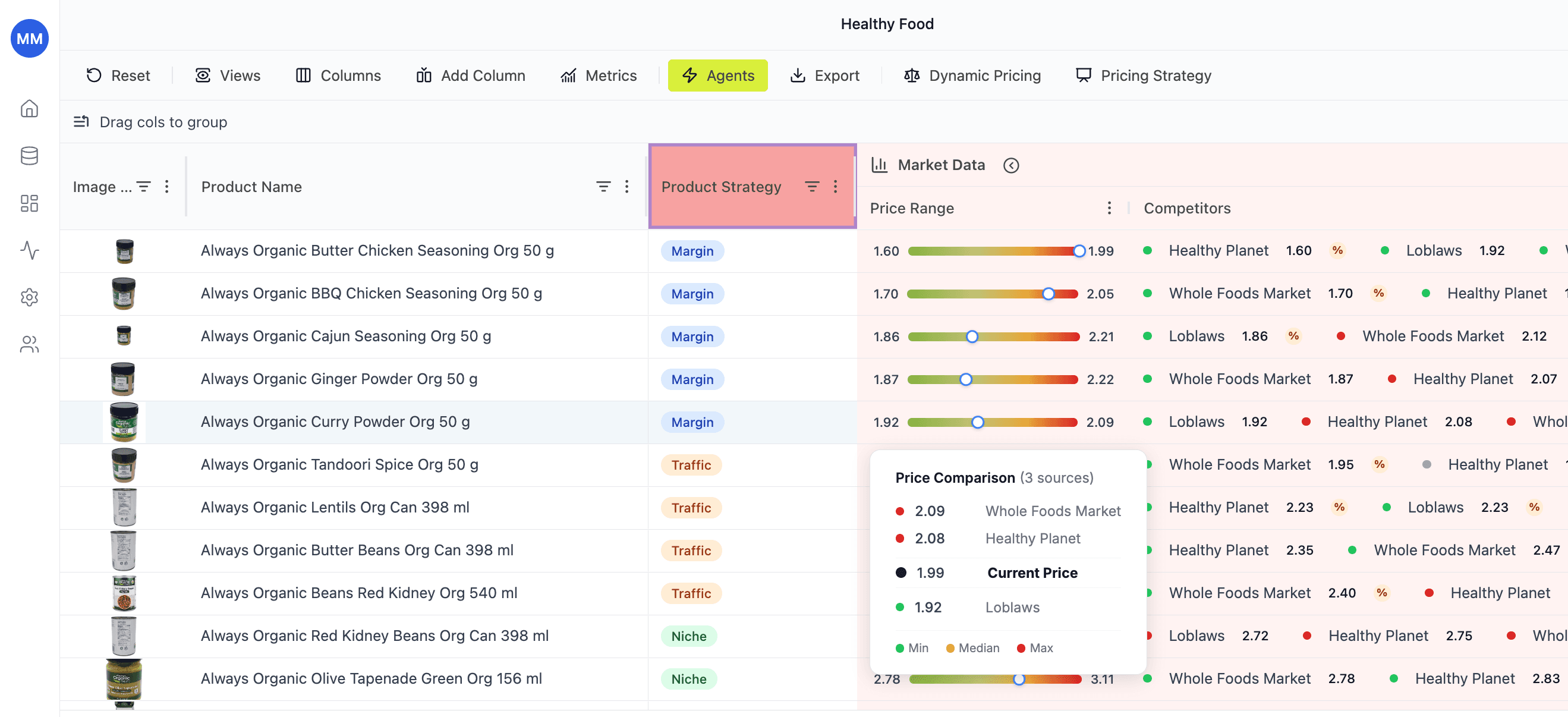
Retailgrid grid showing live competitor market data, price index, and stock signals alongside each product's own price

Repricing rules in plain language

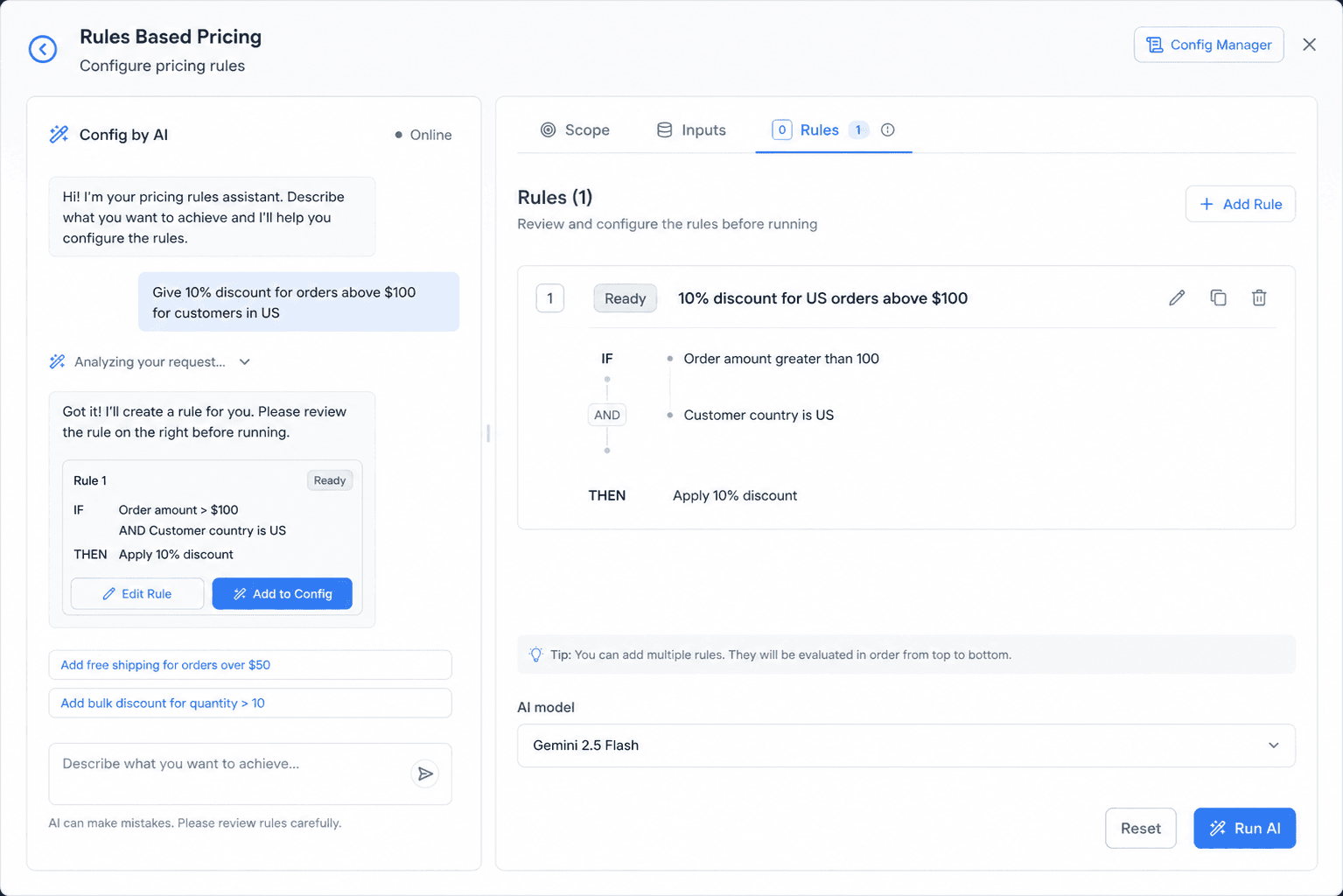
Configure when prices should move - competitor undercut beyond a threshold, stock below a level, a scheduled window - in plain language, with margin floors and MAP guardrails layered on top. Edit a rule once and it propagates across the catalog.
  • Trigger on competitor, stock, demand, or schedule
  • Margin floors and MAP guardrails built in
  • No code, no black-box model to trust
Retailgrid rules configuration screen where repricing rules are defined in plain language with margin and MAP guardrails

Every price change, explained

Each proposed price shows the signal that triggered it and the rule that fired, next to the competitor chart and the weekly profit and price impact - so your team approves with confidence and any move survives a CFO's question.
  • Proposed price with the trigger and the math
  • Competitor and weekly profit charts in view
  • One-click approval per SKU, full audit trail
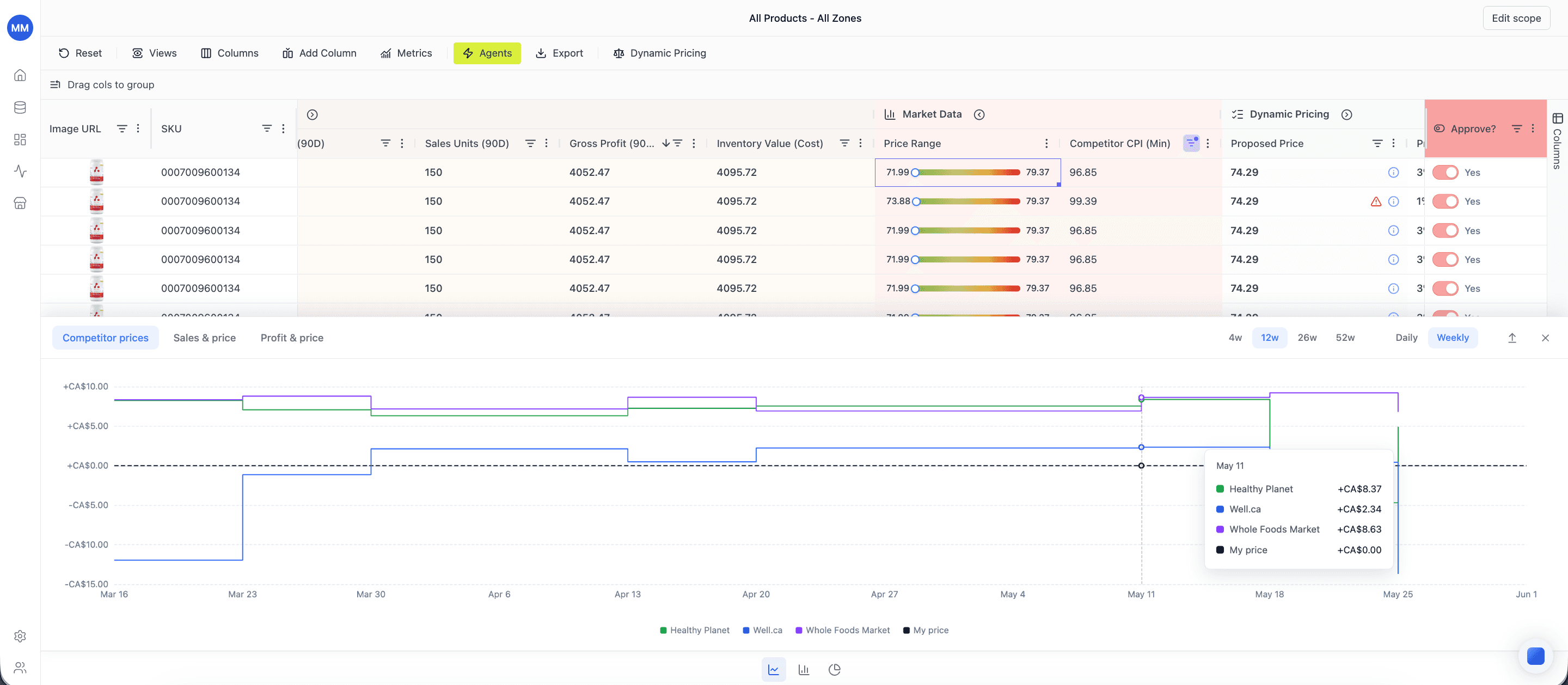
Retailgrid grid showing proposed dynamic prices next to a competitor price chart and weekly profit impact for each SKU
How it works

From manual repricing to live dynamic pricing - in days.

Start with one category, prove the rules, scale to the rest of the catalog at the pace your team is comfortable with.

01

Connect signals

Competitor monitoring, stock feeds, sales velocity, and any custom signals you have. Retailgrid wires them into the rules engine with no data engineering required.

02

Define dynamic rules

Configure when prices should move: competitor undercut by more than X%, stock below threshold Y, demand surge in window Z. Layer in margin floors and MAP guardrails.

03

Run with confidence

Dynamic pricing executes against your rules. Every change is logged with the trigger and the math. Edit a rule once and the change propagates across the catalog.

See it live

Walk through the dynamic pricing software on a real catalog.

Click through the dynamic and rules-based pricing demo - watch Retailgrid react to competitor moves and stock levels, then apply the rules you set across thousands of SKUs, with the agent showing its math before any price moves. No signup.

Dynamic pricing software FAQ

Common questions about dynamic pricing software.

What is dynamic pricing software?
Dynamic pricing software automatically adjusts retail prices in response to live signals - competitor moves, stock levels, and demand - instead of leaving every change to a manual spreadsheet. Retailgrid does this inside a familiar grid: it reads the signals, applies the rules you set, and shows the math behind each price so the change is explainable rather than a black-box output.
How is Retailgrid's dynamic pricing software different from a black-box algorithm?
A typical dynamic pricing algorithm reacts fast but returns a number nobody can explain - including the team that bought it. Retailgrid combines AI dynamic pricing with transparent, rules-based logic: every price change shows the signal that triggered it, the rule that fired, and the calculation that produced the new price. That gives you a CFO-ready audit trail by default.
What signals can trigger automated repricing?
Competitor price moves, stock thresholds, sales velocity, demand surges, time-of-day windows, and any custom signal you already have. You decide which signals matter and how they map to price actions - for example, reprice when a competitor undercuts by more than a set percentage, or when stock drops below a threshold - all bounded by margin floors and MAP guardrails.
Does dynamic repricing work for ecommerce and marketplaces?
Yes. Dynamic pricing in ecommerce is one of the most common Retailgrid use cases - live competitor monitoring and rule-based repricing run across marketplaces, DTC sites, and aggregators, mapped to your SKUs. The same workspace handles omnichannel and in-store catalogs, so online and offline prices follow one consistent, explainable set of rules.
How fast can we go live with dynamic pricing software?
Days, not months. Most teams start with one category to prove the rules, then scale to the rest of the catalog at their own pace. Signals are wired into the rules engine with no data engineering required, and you stay in control of the level of autonomy - full auto for low-risk SKUs, human-in-the-loop for sensitive categories.

Dynamic pricing that doesn't make you nervous.

See how Retailgrid combines live signals with transparent rules - so dynamic pricing speeds up your team without making your CFO unhappy.