Pricing optimization software for fashion retailers
Fashion pricing runs on sell-through, not competitor moves - markdown waves, size-curve logic, margin floors. What to look for before you buy.
Fashion retail has a pricing problem that most software vendors either ignore or dramatically oversimplify.
Generic price optimization platforms are built around a single core loop: monitor competitors, detect price changes, apply repricing rules, update prices. That loop works well for electronics, health and beauty, and consumer goods - categories where the primary signal driving price decisions is what a competitor just did.
In fashion, the primary signal is completely different. It is what your own inventory is doing. A style tracking 15 points behind plan at week four of a twelve-week season is not a competitor intelligence problem. It is a sell-through problem, and it needs a specific kind of pricing response - one that most generic optimization platforms were never built to deliver.
This guide is for US fashion retailers evaluating pricing optimization software in 2026. Here is what actually matters for your vertical, and what to probe in every vendor demo.
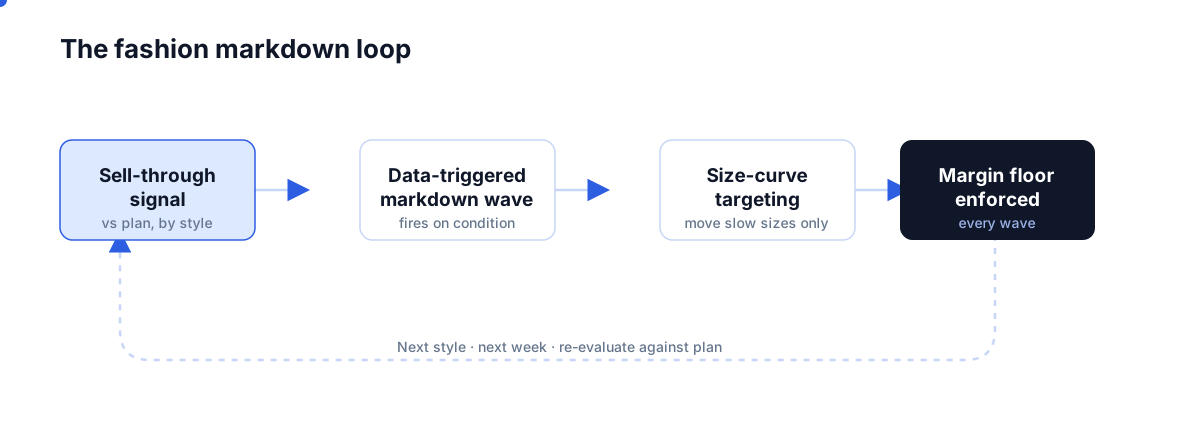
Sell-through rate is the signal that drives fashion pricing
In electronics, you are reacting to the market. In fashion, you are racing the calendar.
A pricing decision made in week one of a twelve-week selling season can be genuinely irreversible by week six. Mark down too late and you are running clearance in the final two weeks with no room to recover margin. Mark down at the wrong depth and you destroy full-price sell-through on sizes that were moving fine.
The pricing optimization software that works for fashion needs to be built around this rhythm - not retrofitted with a markdown module bolted onto a competitor monitoring platform.
Specifically, it needs to handle three things that generic platforms handle badly.
Data-triggered markdown waves. Calendar-triggered markdowns fire on a date regardless of what inventory is doing. Data-triggered markdowns fire when a condition is met - sell-through below threshold, days-on-shelf above target, weeks-to-season-end below a defined window. The difference in margin outcome over a season is significant. Styles that are performing get to hold full-price longer. Styles that are lagging get an earlier intervention when the remaining season can still absorb the velocity uplift.
Size-curve targeting. When your medium and large sizes are sold out but XXL is stacking up, a blanket style markdown is a blunt instrument. It gives a discount to the sizes that needed no help and uses the markdown budget on the sizes that actually need to move. Look for platforms that support size-level markdown targeting as a native concept - not a workaround column in a spreadsheet.
Margin floor enforcement by wave. Even in a clearance scenario, prices should not move below cost recovery. The pricing optimization software you buy needs to enforce margin floors automatically on every markdown wave, including the final clearance window - not just on regular pricing decisions.
What to look for beyond markdown logic
Markdown and sell-through automation are the fashion-specific requirements. But there are platform-level features that matter across all retail verticals, and fashion teams need to evaluate these too.
Explainability per recommendation. When a style is recommended for markdown at 25%, your merchandising team needs to see why - the current sell-through rate, the plan gap, the expected velocity uplift, the margin impact of acting now versus waiting two weeks. A recommendation that cannot show its math is a recommendation that will not get acted on. Retailgrid's agentic pricing approach is built around this: every recommendation shows the signal, the rule, and the math before anything moves.
Competitive monitoring for promotional activity. Competitor pricing in fashion matters most during promotional windows - when a competitor runs a sitewide discount, the pricing context for your comparable styles shifts immediately. Your platform needs to surface competitor promotional activity, not just everyday pricing, and alert you when a competitor move changes the competitive landscape on a style you are holding at full price.
Deployment speed. A fashion pricing platform that takes six months to configure is a platform that misses the current selling season entirely. Most US fashion teams need to be live within a week or two of deciding. Self-serve platforms that deploy from an assortment plan upload and go live on a first markdown wave without an IT project are the standard worth holding any vendor to.
The demo questions worth asking
Before committing to any platform, run through these four questions in the vendor demo.
1. Show me a sell-through-triggered markdown wave. Ask the vendor to demonstrate a data-triggered markdown - not a calendar markdown. Ask what conditions trigger it, how the margin floor applies, and how the recommendation is presented to the category manager before it fires.
2. Does the platform support size-level markdown targeting? If the answer is that size is a variant within a style SKU and handled the same way, that is not size-curve logic. Push for a demonstration on a style with uneven size distribution.
3. What is the deployment timeline from assortment plan upload to first live markdown? The honest answer for a purpose-built fashion pricing platform should be measured in days, not weeks. Anything longer suggests significant configuration overhead that will eat into your first season.
4. How are margin floors handled in clearance scenarios? Specifically, can you configure different margin floors for different stages of the markdown cadence - full price, mid-season, and clearance - and are they enforced automatically?
What good fashion pricing software delivers over a season
The teams that get the most out of pricing optimization software in fashion are not the ones that automate everything. They are the ones that automate the threshold monitoring and recommendation generation - and keep human approval on the moves that matter.
When a sell-through trigger fires on a style at week four, the system surfaces the recommendation immediately: the style, the current position, the recommended markdown depth, the expected sell-through recovery, the margin impact. The merchant reviews and approves in minutes rather than discovering the problem in a weekly spreadsheet review.
A multi-brand fashion retailer using Retailgrid in Southern Europe replaced six separate pricing tools with one workspace, reduced planning time by 60%, and improved markdown efficiency by 18%. That outcome was driven by the shift from calendar-based blanket markdowns to sell-through-triggered, size-curve-targeted markdown waves - with every recommendation explainable to the category team before any price moved.
Book a 20-minute demo with Retailgrid to see the fashion markdown workflow on a real seasonal assortment, or explore the interactive demo without a signup.
Frequently asked questions
Can pricing optimization software handle multiple selling seasons simultaneously?
Yes - purpose-built fashion pricing platforms support multiple concurrent season plans, each with their own markdown calendars, sell-through thresholds, and margin floor configurations. Carry-over styles from a previous season running alongside new-season arrivals are managed with separate wave logic, so the markdown cadence for a clearance line does not bleed into the full-price strategy for the new collection.
How does sell-through-triggered markdown compare to AI-driven markdown optimization?
They are not mutually exclusive. Sell-through triggers define the conditions under which a markdown fires. AI optimization determines the depth of the markdown - modeling demand response at different price points to find the reduction that recovers sell-through velocity without sacrificing more margin than necessary. The best fashion pricing platforms combine both: trigger conditions set by the merchant, markdown depth governed by the demand model.
What catalog size makes fashion pricing optimization software worthwhile?
For US fashion retailers, the practical threshold is around 300-500 active styles per season. Below that, a disciplined manual review process can cover the assortment weekly. Above it, the coverage gaps from manual workflows start showing up in season-end clearance rates and margin outcomes that could have been recovered with earlier, better-targeted interventions.