Reprice at the speed of the market. Audit every move.
Dynamic pricing software shouldn't mean black-box AI making decisions you can't explain. Retailgrid combines live signals - competitors, stock, demand - with transparent rules so every price change has a reason your CFO will sign off on.
Either too slow to react, or too opaque to trust.
Retailers face two failure modes with dynamic pricing. Manual workflows can't keep up with competitor moves and stock signals. Black-box optimization engines react fast but produce price changes nobody can explain - including the team that bought the software.
Live signals. Transparent rules. Explainable every time.
Three capabilities that separate dynamic pricing software you can trust from a black-box repricing engine - and make it operable at scale.
Dynamic pricing software, built on a grid you already know.
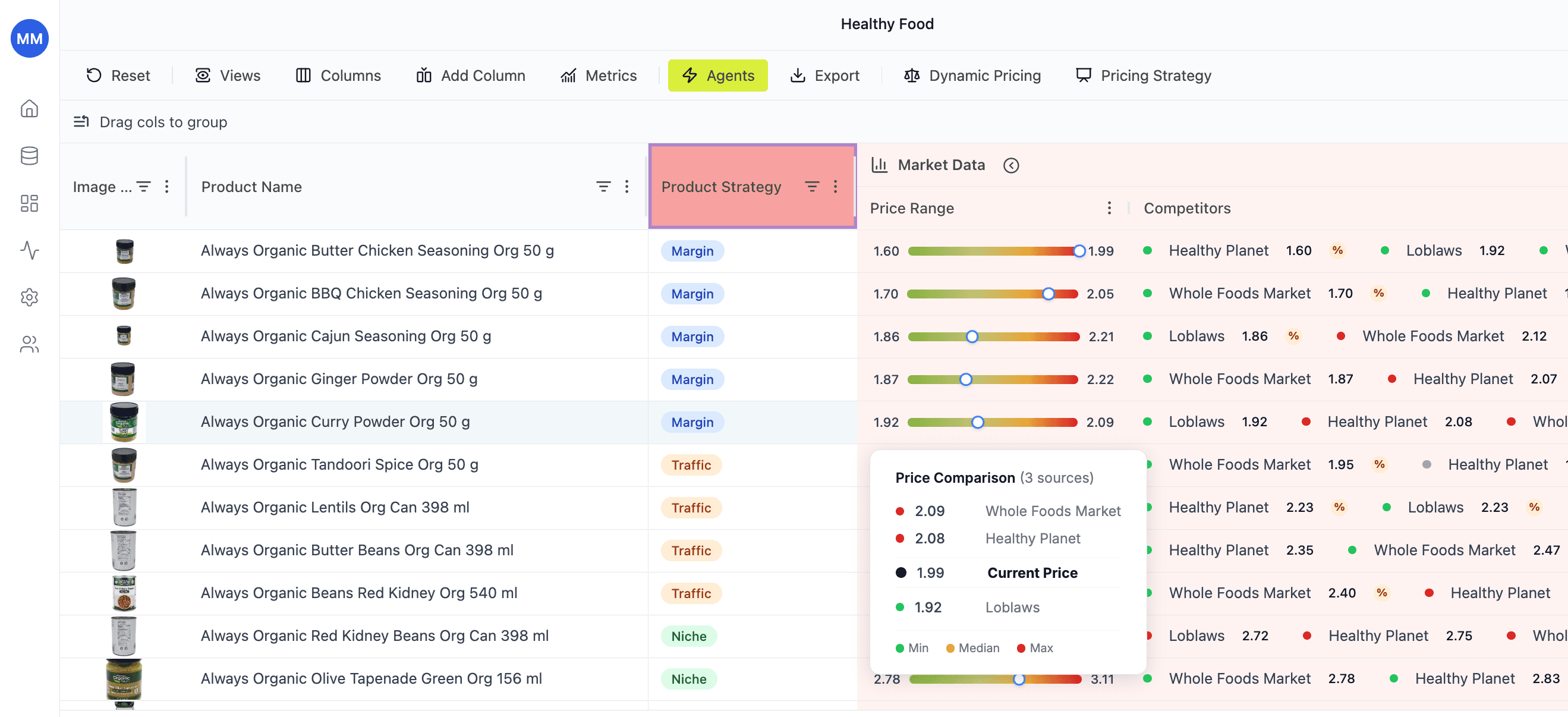
Live market data, next to your prices
- Competitor CPI and price ranges per SKU
- 4-hour refresh, auto-mapped to your catalog
- No separate monitoring tool to reconcile
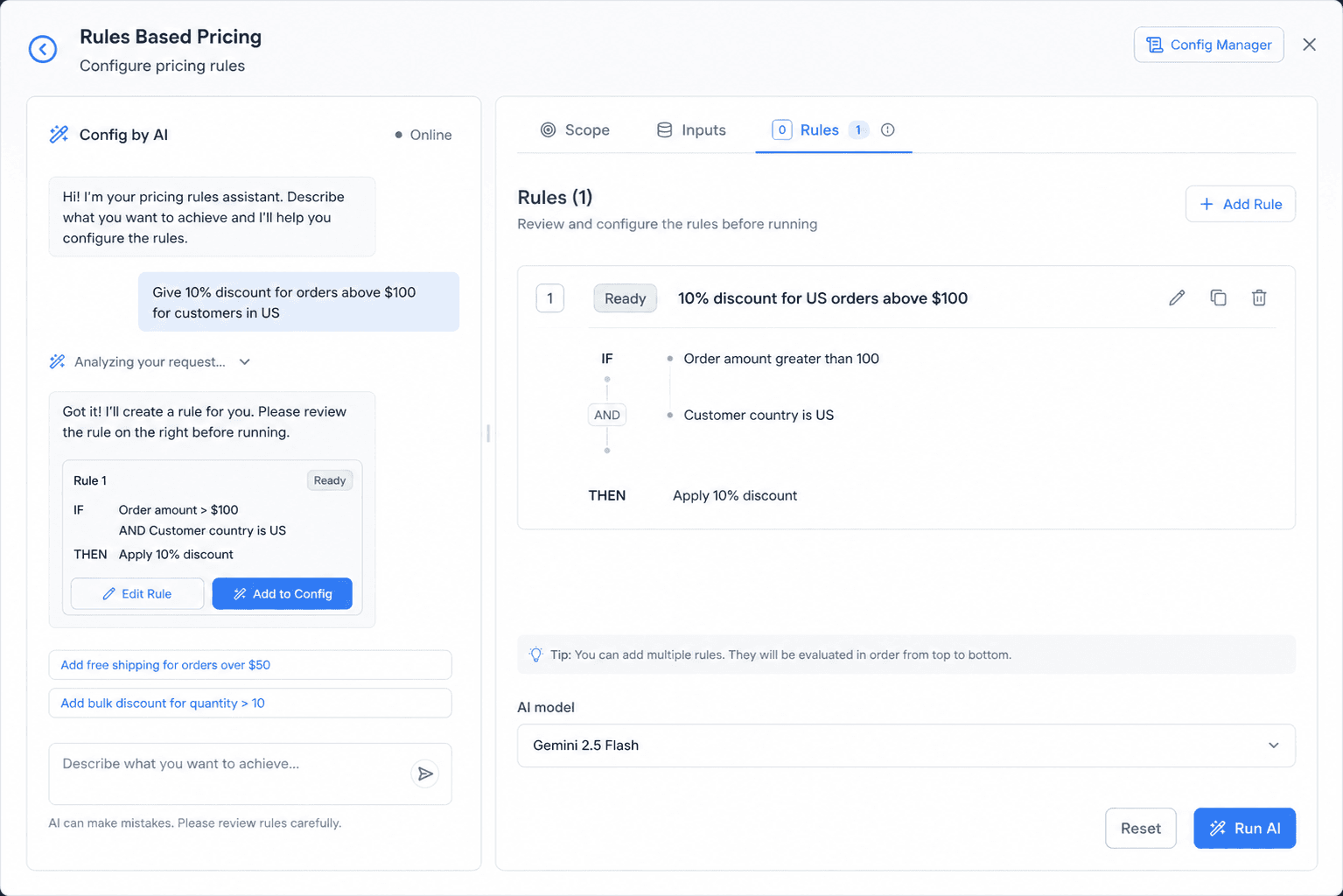
Repricing rules in plain language
- Trigger on competitor, stock, demand, or schedule
- Margin floors and MAP guardrails built in
- No code, no black-box model to trust
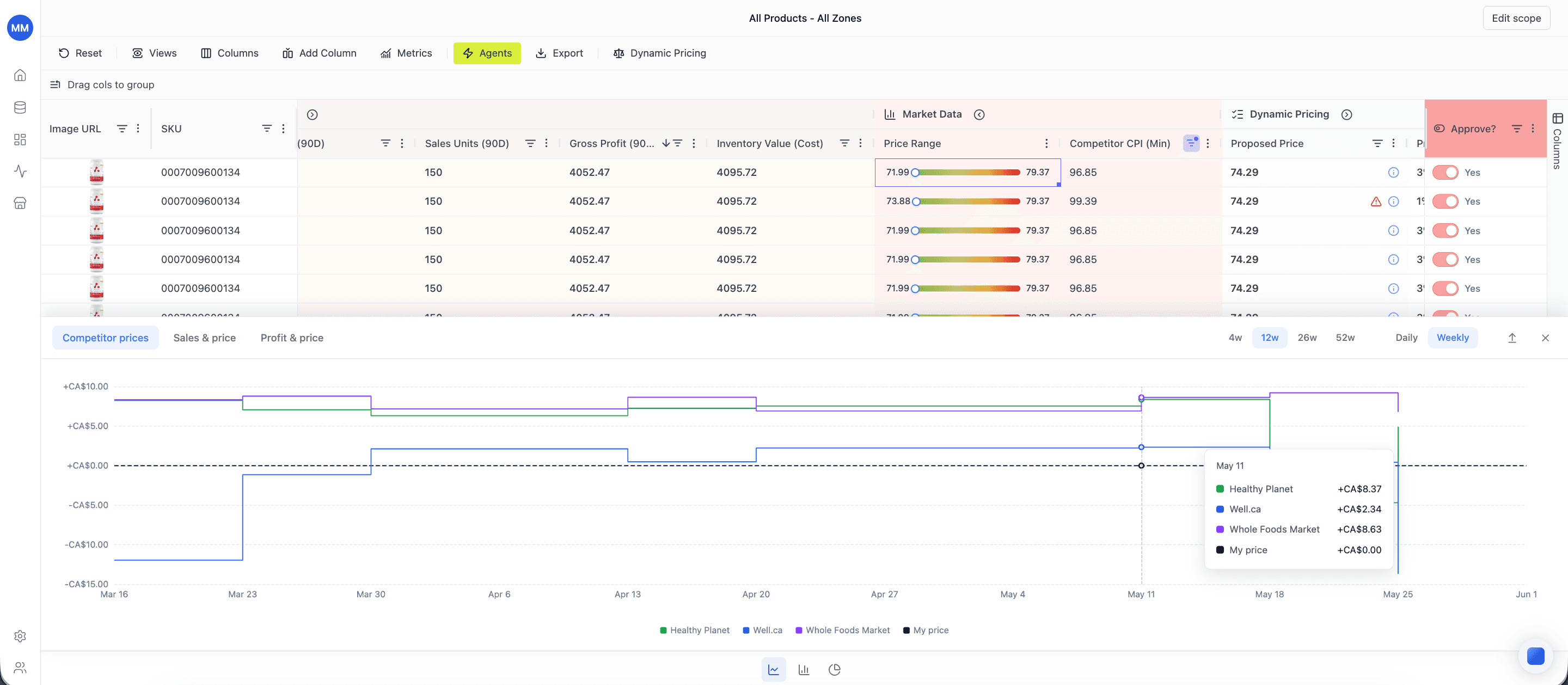
Every price change, explained
- Proposed price with the trigger and the math
- Competitor and weekly profit charts in view
- One-click approval per SKU, full audit trail
From manual repricing to live dynamic pricing - in days.
Start with one category, prove the rules, scale to the rest of the catalog at the pace your team is comfortable with.
Connect signals
Competitor monitoring, stock feeds, sales velocity, and any custom signals you have. Retailgrid wires them into the rules engine with no data engineering required.
Define dynamic rules
Configure when prices should move: competitor undercut by more than X%, stock below threshold Y, demand surge in window Z. Layer in margin floors and MAP guardrails.
Run with confidence
Dynamic pricing executes against your rules. Every change is logged with the trigger and the math. Edit a rule once and the change propagates across the catalog.
Walk through the dynamic pricing software on a real catalog.
Click through the dynamic and rules-based pricing demo - watch Retailgrid react to competitor moves and stock levels, then apply the rules you set across thousands of SKUs, with the agent showing its math before any price moves. No signup.